Gateway to Zion & Bryce: How to Plan Your Adventure
Every great trip starts with a spark — an image, a story, or a landscape that calls your name until you finally answer. For me, that call came from the countless photos of Zion National Park — those towering canyon walls, the river carving through red rock, and the promise of walking through the cool waters of The Narrows.
I flew into Salt Lake City, rented a car, and headed south toward the red rock wonderland of Zion National Park, basing myself at the Petty Ranch Inn. Most mornings started the same way: sitting in one of Springdale’s coffee shops with a latte in hand and my guidebook open, plotting out the day’s adventures beneath those towering canyon walls. Oh, and looking at the forecast! This caused me to shuffle things a bit, but I had lots of flexibility.
Much like my Amalfi series, this trip deserves one! This post kicks off my three-part series exploring Zion and Bryce Canyon — starting here with the how before we dive into the wow.
Why Zion and Bryce Belong Together
Zion and Bryce are like siblings cut from the same canyon wall — familiar yet completely distinct.
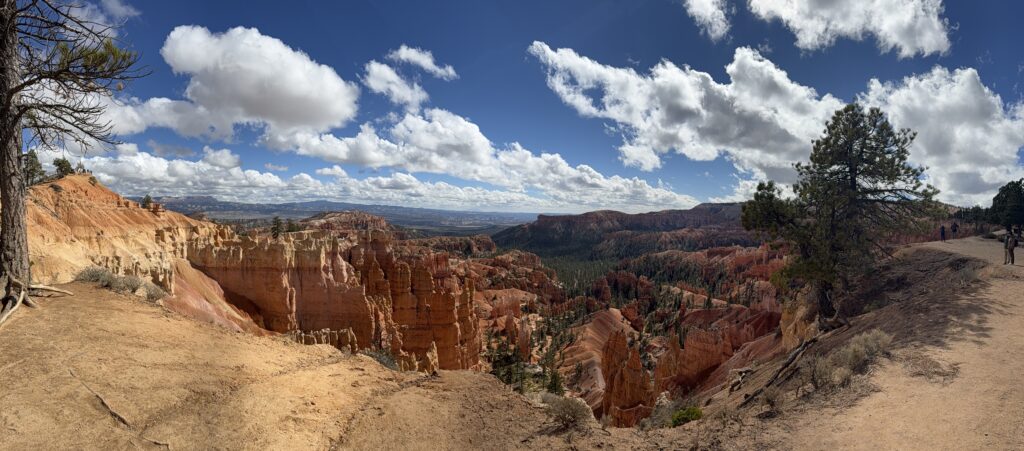
Zion pulls you inward with its towering red-rock walls and lush canyon floor. Bryce lifts you skyward, its hoodoos glowing in sherbet colors at sunrise. Visiting both feels like a full conversation with the desert — depth and height, shadow and light.
Getting There
I flew into Salt Lake City — my go-to as a Delta loyalist since it’s a direct flight from Indy and an easy gateway to southern Utah. From there, it’s about a 4½-hour drive to Springdale, where I based myself for the entire trip.
Once settled at the Petty Ranch Inn, I made a day trip to Bryce Canyon — out via the interstate and back via the Mount Carmel route. It was the perfect way to see both sides of the desert: fast and open on the way out, winding and cinematic on the way back.
That Mount Carmel route deserves its own spotlight. The road climbs through sandstone tunnels and hugs cliffs in a series of switchbacks that can feel a little hair-raising — especially if you’re not used to mountain driving — but the payoff is unreal. Checkerboard Mesa, pastel cliffs, and sweeping canyon views make every white-knuckled turn worth it. Having learned how to drive in Puerto Rico really paid off this week as I navigated the Mount Carmel route.
If you have the time, consider a one-night stop near Bryce to catch sunrise at the amphitheater, but doing it as a day trip from Zion is absolutely doable and incredibly rewarding.
Another way to route yourself, if you are not set on an airline, and want to stay overnight in Bryce? Fly into Salt Lake overnight and visit Bryce. Then head to Zion, and when it’s time to leave, fly home from Las Vegas, which is about an hour shorter drive than Salt Lake City.
Where to Stay
Originally, I’d booked the charming Novellhouse Inn, but a Delta Platinum challenge that would set me into Platinum status for 2026 changed everything. Cue a frantic rebook and a new base at the Petty Ranch Inn — and honestly? It turned out to be the perfect kind of detour. Simple, welcoming, and close enough to the park that I could be sipping coffee one minute and hiking among red cliffs the next. And perhaps one of the most comfortable beds I’ve ever slept in! Just what you need after a day of hiking.
That said, there are plenty of options in Springdale, including campsites. If you’d rather sleep under the stars, Springdale has lots of options! I also noticed some large renovations of the camp sites inside the park, and based on this article, they are going to be a nice improvement.
Pro tip: Book early — especially in Springdale (for Zion) and Bryce Canyon City (for Bryce). Spring and fall fill up fast.
When to Go
Late spring and early fall are prime: comfortable temps, fewer crowds, and waterfalls still flowing in Zion.
Summer brings heat and heavy visitation; winter offers solitude and snow-dusted hoodoos (stunning but brisk). I love fall travel, so it was a no brainer for me! The colors were not as intense at Zion, but did see a nice display of yellows and oranges on the drive between Zion and Bryce.
In the winter, you are able to drive through the park and are not required to utilize the park bus to get to the various trailheads. My friend Laura at Hi Friends, It’s Laura visited in February of this year and has a full report with great insights!
Getting Around
Zion operates a mandatory shuttle system during most of the year — efficient, but plan buffer time. From Springdale you can take the complimentary shuttle into the park, and then use the park shuttle to move inside the park. I did this on my first of three days at the park, but preferred the convenience of having my rental care there. If you do decide to drive, just plan on being at the visitor center lot by 7:00 AM. The lot isn’t enormous and it fills up fast! I could have easily auctioned off my parking spot yesterday and paid for the cost of the trip.
Bryce is a drive-at-your-own-pace park, perfect for viewpoint hopping and impromptu photo stops. The park also offers a shuttle, but it didn’t seem they had as many as Zion. My approach was to drive to the opposite end of the park and work my way back, stopping at the viewpoints for what I thought would be the best views! Finally at Sunrise Point I found a place to park and set off on my hike to the hoodoos. More on that in a future post!
Pack Smart
Desert hiking demands layers and hydration, even in the cooler fall days!
- Breathable long sleeves and a sun hat
- Reusable water bottle or hydration pack
- Sunscreen, snacks, and a small first-aid kit
- A dry bag is convenient to keep your phone and car fob dry during unexpected downpours
- A real paper map — cell service disappears quickly in the canyons
What’s Next
Next up: Zion National Park — Where Canyon Walls Whisper.
We’ll chase waterfalls after the rain, wander beneath the towering cliffs, and find those quiet solo-traveler moments that make Zion unforgettable.
Get Travel Stories as They Unfold
Get new travel stories, memorable meals, and practical tips delivered when there’s something worth sharing.